
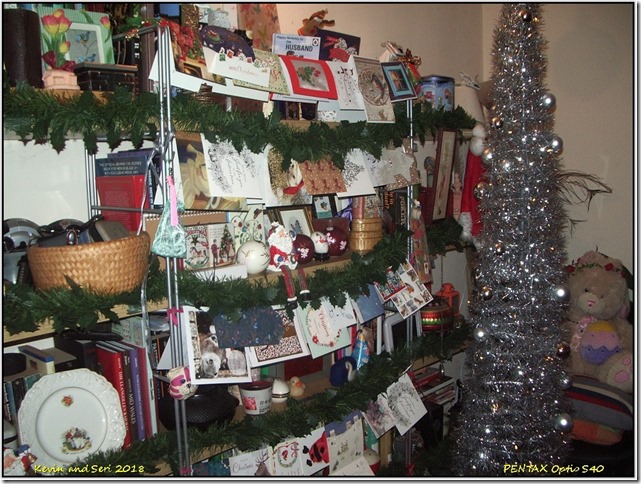
Mid-December sped by in the usual flurry of glitter and lists. The Xmas cards had been written and posted. I loved sending and receiving them. The annual catch up of love and news from afar. I have friends from around the world and we only kept in touch via birthday cards, Xmas cards with the occasional round-robin letters. We were very close friends once, but had been apart too long with now with a different outlook to life but we still maintained the friendship. I think it was great that we still made the effort to stay in touch in this special way. The cards got strung up around the room and enjoyed very much.
For the first time, the Christmas tree and decorations were only up in mid-December  Most of my colleagues had theirs up from the start of Advent. I was just so busy at work and very tired by the time I reached home. I was not even motivated when we drove past beautifully lit windows with a Xmas tree, tall and magical in the corner. This was not me at all and I really had to roll up my sleeves and find the time to dust off the tinsel, opened the box of baubles, decorated the tree and made my casa into a magical wonderland. I did these all during the weekend and I was chuffed to see my handiwork. There was something magical about a tree spruced up with lavish baubles, toppers and lights. Now Xmas had officially started.
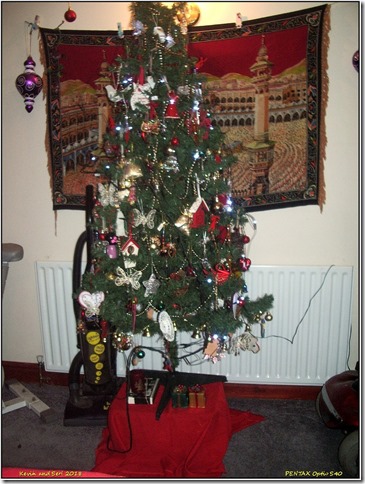
It was Prince Albert, husband of Queen Victoria, who brought a tree from Germany in 1841 and set it up in Windsor Castle, reminiscent of his childhood celebration in Germany. Ours was nearly 15 years old and every year I added an extravagant bauble to the tree. I often purchased one from John Lewis when we made our annual trip to Solihull but even this year we couldn’t make it. Instead, I bought a beautiful hand-made bauble from our favourite playground. I also saw a pop-up Xmas tree from Wilkinson which would be lovely on top of the stairs. Unfortunately at £40, I couldn’t justify the expense. But a week before Xmas, it went down to £10!!! Woo..hoo. I bought it but it didn’t fit on the staircase. Instead, it stood by the bookshelf, looking a bit out-of-place. I’ll find it a better place next year.

My colleagues and I planned to check out the Birmingham Xmas market but we just couldn’t agreed to the date. It had to be on a Friday after office. We also didn’t do the ‘Not a Xmas dinner’ lunch because we couldn’t agree on the location. It was that bad. Thankfully all of us agreed on the date for the office Xmas dinner. This year it was held at Scarman and we trekked there in our fineries on a very wet, windy afternoon. After being seated with a glass of fresh orange juice, we pulled the crackers, donned the party hat and cracked at the silly jokes. It was hilarious.

Then we joined the long queue for the starters. As usual, I headed for the seafood which luckily for me wasn’t busy. For the main course, I’d another fish course, baked sole with a lemon sauce and the trimmings with new potatoes, carrots and peas. Since the fish was tiny, I also had the vegetable puff. What a combination. At the table, we checked each other’s loaded plates. Conversations and laughter flowed easily. Dessert was limited for me because I don’t want anything with gelatine or alcohol. That left me with creme brulee which was yummy. After the long lunch, we headed to the sitting room for coffee and mince pies. I’d hot chocolate and cookies. It was lovely catching up with colleagues from other departments. Then it was a slow dawdle back to the office where we sat quietly to digest our food.
Apart from merry making and food, Xmas was also about giving. This year it was for a very good cause. It was a photo competition for a Dress-down Day to raise funds for the Warwick Cancer Research Centre. We were encouraged to dig out that sparkly festive jumper or favourite comfy clothes around the office. Since I don’t do dress-down, I wore my 3-year old sparkly Xmas jumper. This was not the official photograph for the competition. I took it when my colleagues were still trying out their best pose. Although we didn’t win, we’d a good time posing for a good cause. The Cancer Research Centre brought together the world class of expertise of clinicians, chemists, biologists, engineers and mathematicians to discover new approaches to drug discovery, personalised medicine, diagnosis and patient care.

Next was the workplace Secret Santa. Each year, we agreed to pull a name out of a hat, saddling ourselves with the anxiety-inducing task of buying a Xmas present for a co-worker we (in all likelihood) barely knew. Each department had their own and as usual ours was amongst those who worked in the ground floor. Early during the month, each of us had picked a name, bought the £5 gift and deposited it in a Santa’s bag. Then it was time for Santa’s Elf to distribute the gift and we watched the public reaction of the receiver to the gift. Off course, all were received graciously. Then we’d nibbles which all of us contributed and quizzes. Secret Santa was always a great idea when you were high on festive cheer. We also contributed £5 each to a homeless charity. Wasn’t that fantastic?
The University also laid out a Xmas spread for the staff at the newly opened conference centre, The Slate, overlooking the ‘nursery’ lake. When we arrived, the party was in full swing with an orchestra playing in the background. There were plenty of mince pies and finger-foods to keep us going. The drinks corner was very popular but I stuck to non-alcoholic mulled wine. Sheets with Xmas song lyrics were later distributed and it was time for a sing-a-long. The songs range from Jingle Bells, Let it snow to Frosty the Snowman. Quite an eclectic list. And everyone joined in which was fantastic. It really brought everyone together.
The 21st was the Winter Solstice, the shortest day of 2017 for anyone living in the Northern Hemisphere and the official first day of winter. Felt a bit strange because we felt like it was months ago. Technically speaking, the Solstice occurred when the sun was directly over the Tropic of Capricorn, or 23.5° south latitude. In 2017, this was at exactly 11:28 am Eastern time on December 21. The Winter Solstice marked the darkest day and shortest day due to the sun being at its most southern position. The world looked pretty grim now, but as soon as the solstice had passed, the days started getting longer again and we can start looking forward to Spring!!! The Winter Solstice was a major pagan festival, with rituals of rebirth having been celebrated for thousands of years. Many of the traditions we now thought of as being part of Xmas - including Yule logs, mistletoe and Xmas trees – had their roots in the pagan celebrations of winter solstice.

My Xmas break started on the 23/12 and back at work on the 3rd of January 2018, 12 whole days. Whoop…whoop. But the weather forecast wasn’t too great. The month started quietly with a ridge of high pressure crossing the southern areas. Snowy scenes across the country had added to the festive mood, but it appeared we’d peaked too soon. In the run-up to Xmas, it was going to be increasingly mild and windy. But whatever the weather, I am determined to enjoy my holidays. First on the list was Draycote Waters, where the winds nearly blew us off but these sailors loved it.

The water levels was surprisingly low that a few sandy islands were exposed in the middle of the reservoir. It had fallen because of the low winter rainfall. This meant that the waders were not swimming closer to the walls. A Little Grebe was swimming in its winter colours with pale buff on its lower quarters while the back was a dirty brown. Also known as the dabchick, it had a fluffy rear end, a feature accentuated by its habit of fluffing up its rump feathers. When it sported us, it dived in and we scanned the waters to see it surfacing some distance away. They foraged on insects, larvae and small fish. It was quite noisy too, calling with a distinctive whinnying trill.

We walked on and came across a pair of Goosander busy feeding by diving underwater to catch fish by swift pursuit. These handsome diving ducks were members of the Sawbill family, so called because of their long, serrated bills, used for catching fish. Adult males were crispy patterned with gleaming white bodies and dark, iridescent-green heads. The back was black with red bill. Females were grey-bodied with a white chest and a rusty-cinnamon shaggy crests on the backs of their heads. In flights, both sexes showed large white patches on the upper-wings as the torpedo-shaped bodies whistled by.

In winter, Goosanders also known as Mergansers, formed large flocks on inland reservoirs and rivers. They stayed in these tight flocks to feed and court during the cold months. Male and female had different calls, with the male producing low-pitched croaking. sounds in contrast to the harsh ‘karr’ and cackle of the females. They’d a couple of nicknames which included dragon, sawbill, big guy, fish duck and Catholic duck. Unusually for a duck, they nested in holes in trees which must be tricky once the chicks hatched.

We continued walking, braving the very cold winds. We turned back when we spotted a Kestrel hovering quite close to the reservoir. From where we were standing near the verge, we could see its pointed wings and distinctive long tail. The plumage was light chestnut brown with blackish spots on the upper-side and buff with narrow blackish streaks on the underside. Like most birds of prey, it had keen eyesight enabling it to spot small preys such as voles, shrews and mice from a distance. Once prey was sighted, it made a short, steep dive towards the target and disappeared from our sight.

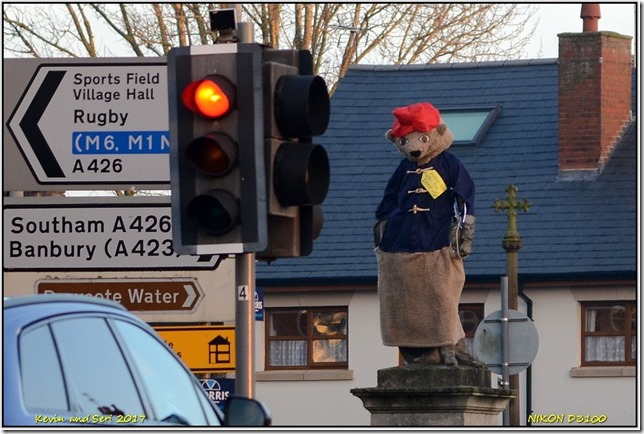
It was also a cue for us to head home. We stopped at the village of Dunchurch overlooking the reservoir. Every year, a group pf pranksters dressed the statue of Lord John Scott a makeover and their efforts for 2017 was a Paddington Bear, standing proud in the centre of the village. It coincided with the release Paddington 2, a live-action animated comedy film. Each Xmas, pranksters dressed up the statute in the dead of the night, a tradition which went back to the 1970s. Over the years, it had been transformed into Spiderman, Smurf, Teletubby, Pingu, an Olympian, The Queen, Prince George, Minion and last year was a Stormtrooper.
On Xmas eve, we made our way to Slimbridge WWT. There were no last minute shopping for us. I could imagine how chaotic and stress it was going to be as Xmas Eve was on a Sunday when shops opened late and closed early. We left the casa at 10.13 am with the mercury touching 9.3C. The sun was trying to poke out of the cloud. When we arrived, the place was buzzing as families with young children had bought tickets like having breakfast or afternoon tea with the Elves, visiting Santa in his magical grotto, taking part in the festive activities like icing your own gingerbread man, building an elf den and toasting marshmallows. Sounds fun. How I wished I was a child again…
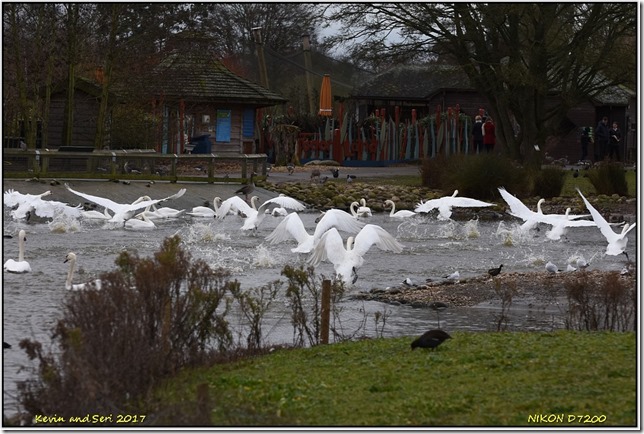
As we left the visitor centre, Babe spotted the Mute Swans doing their synchronised swimming. Nearly, all of them swam together towards the end of the lake. We’d seen this behaviour before and I always wondered why. It was as if they were about to fly off together but changed their minds. I think these were the resident Mute Swans where their wings were clipped so that they couldn’t fly off. The sound of dozens of beating wings against the water was incredible. Unfortunately, they don’t do it often. Mute swans were graceful on the water but appeared awkward and ungainly in flight and on land. When swimming, they held their wings over their backs in a puffed position to advertise their strength, and the neck held in a strong S-curve as an aggressive position.
We headed straight to Rushy Hide because there were reported sightings of the Little Stint again. The word was out and the hide was buzzing but we managed to squeeze in. There it was scampering around on the small gravelly island amongst the wildfowl. The Stint was a tiny wading bird with a short straight fine black bill and medium-length black legs. In winter, it was grey above and had a very white underneath. Autumn birds had two pale stripes or 'braces' down the back. It doesn’t breed in the UK, but was a passage migrant. This sighting was rare as very few birds spend the winter here, most migrating to Africa. They fed by foraging rapidly along sandy and muddy shores for insects, crustaceans and molluscs. The preys were detected by sight.

Nearby, sheltered in a cove was a flock of Redshank, having a snooze. As its name suggests, Redshanks' most distinctive features were their bright orange-red legs. In fact, Shank was the old name for leg, so its name was just ‘redleg’. They were all huddled up together with their common pose, on one leg. They had a medium-length bill with an orange base to match, brown speckled back and wings and paler belly. Redshanks were notoriously flighty, and had earned the nickname “sentinel of the marsh” or ‘yelper of the marshes’ for their habit of calling as soon as they spotted an intruder. Normally this sets off all the other waders, but today all was quiet as they enjoyed a siesta.

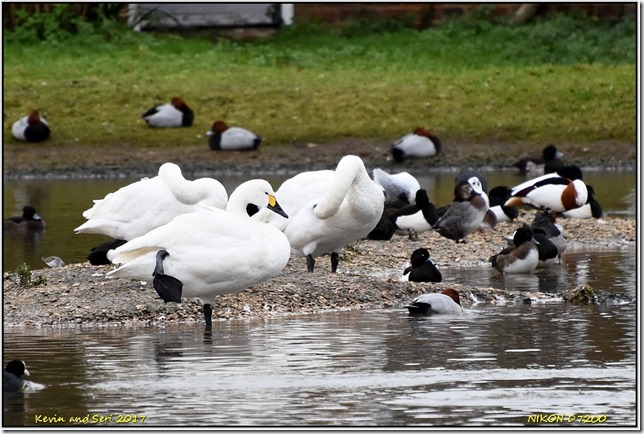
Around the lagoon, the stunning Northern Pintails had doubled in numbers. They were foraging for seeds and insects in the shallow end by upending with tail up and head down, or by submerging head and neck while swimming. Shovelers were bulldozing the water surface, straining aquatic animals, plants and seeds from the water. Cute Teals were picking seeds from the mud. Pochards were either grazing underwater for aquatic plants and insects or having a snooze. The colourful Shelducks were having a siesta on the island. Mallards were dabbling to feed, tipping forward in the water to eat seeds and aquatic vegetation. Tufted ducks were also enjoying a chill-out afternoon. Bewick’s swans were spending their free time either preening or gliding around the lake
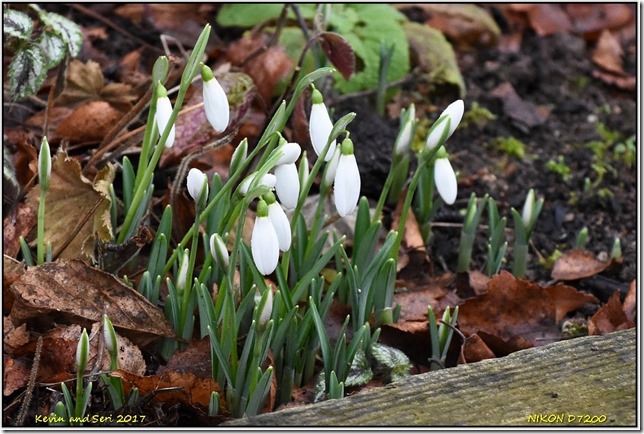
We nipped to Martin Smith Hide and was greeted by these flowering Snowdrops at the entrance. That was a big surprise because it was still December. They were striking blooms in the winter months when little else was growing and a walk through a blanket of snowdrops was a seasonal pleasure. They usually flowered between January and March, often appearing en masse and creating a characteristic white blanket coverage. The species had long been associated with winter as the Latin name Galanthus nivalis literally translated as ‘milk flower of the snow’. In British folklore, Snowdrops had come to symbolise hope and purity.
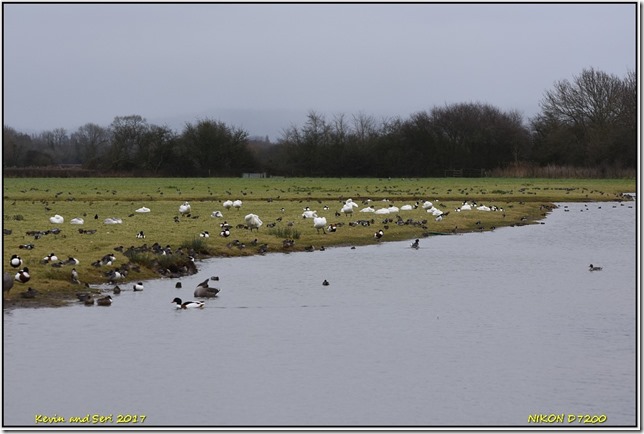
On the Tack piece, a large area of rough grassland interspersed with water-filled scrapes, it was buzzing with wildfowl, birds and waders. According to the sighting board, there were hundreds of Teals, Wigeons, Lapwings, Shelducks, Starlings, Tufted ducks, Northern Pintails, Curlews, Gadwall and Greylags. They were chilling out, preening and foraging. During this time of year, large parts of the tack piece was deliberately flooded to create more habitat for wildlife and attracted them to feed. Lapwings were seen probing the soft ground or patrolling around the edges of floodwater picking up small insects and worms.
We stopped at the vole corner to see if anybody’s home. We heard rustling and suddenly it dashed into its hole and refused to come out. We left a handful of mealworms by the entrance and a Robin immediately appeared and had a few helpings. At Willow Hide, there was no sighting of the Water rail but this Great Spotted Woodpecker flew in and scattered off the Chaffinches and Tits that were feeding on the feeder. We watched it playing hide-and-seek with us. It was a male because it had the small red nape patch. Then, it flew off uttering a sharp flight call.

We checked out Robbie Garnett Hide and was chuffed to bits to see a large flock of Curlews feeding quite close to the water’s edge. Their mottled-brown plumage made for effective camouflage against the marshland and tack piece tussocky grass, which meant they could go about their business unnoticed, prying invertebrates such as ragworms and insects with their purpose built curved bills. An old Scottish name for the Curlew was ‘whaup’ or ‘great whaup’. A few were wheeling in with their haunting calls. Their bubbling, weightless calls, swelled to a crescendo and gently died away, a fluted, buoyant torrent of sound. We heard them descanting and watched them wheeling above the tack piece in a graceful, droop-winged flight. When they were flying, the white wedge on the rump was very visible.

Hooped over turned earth
they stalk between tides,
unlooked for but found,
approaching, too close almost!
The stubble of worms
they take shaved clean
at the root, loose grass
on the breeze

~David Wheatley ‘Curlew by the Humber~
Ted Hughes had described the large, tall wader as ‘wet-footed god of the horizons’ with their ‘wobbling water calls.’ A pity that their desirability as food was caught in the old proverb that a Curlew carried a shilling on its back!!!. We were lucky to have seen them this close and this many because they were classified as Near threatened on the IUCN red List, in the UK as an Amber List species under the Birds of Conservation Concern review and as a Priority Species in the UK Biodiversity Action Plan.

We headed straight for Holden Tower overlooking the Dumbles, another large area of rough grassland, stretching to the Severn Estuary. It was originally designed to provide views of the Bewick’s Swans. We were delighted when the Bewick’s took flight and flew past the tower to head out onto the River Severn. It was impressive to watch them whizzing past at eye-level. We also saw a Buzzard sitting on one of the WW2 pillbox surveying the tidal marshes behind the seafront which were alive with hundreds of birds. I just realised that the Tower was also a vantage point to see the Severn Bore roll in. Across the river was the Forest of Dean, nestling between the Wye Valley, the Vale of Leadon and the Severn Estuary.

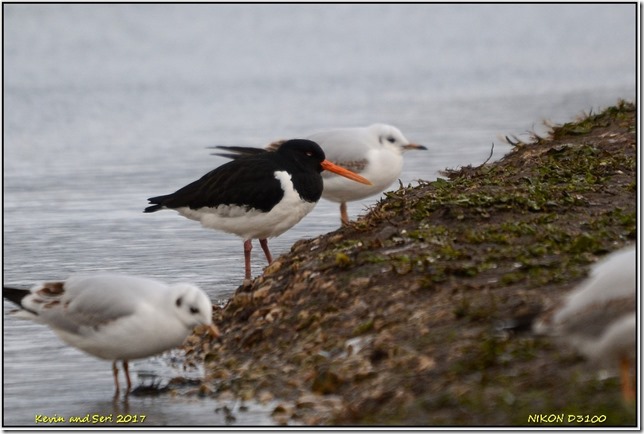
On the way back we checked out every hide to see if anything new had dropped in. Then we headed for South Lake and was surprised to see an Oystercatcher among the Gulls. Historically known as ‘sea pie’, it was hard to miss as it was a large black and white wading bird, with long orange-red bill and reddish-pink leg. During the winter, they were birds of the tidal estuaries and rocky shores. They were highly gregarious outside the breeding season, forming large flocks as they were joined by migrants from Norway. It was only during the breeding season, they flew inland.
We stopped at Swan Lake to see this pair courting. Mute swans were commonly associated with romance because of their stark white beauty, graceful swimming and it mated for life. They were forming the classic image of devotion, with their curved necks entwined in a perfect love heart. It really brought out the romance and hints of Tchaikovsky’s Swan Lake. It was part of a courtship ritual, in which pairs faced each other and, with a ruffle of feathers and lifted wings, bowed gracefully. Once courtship was completed, they were bonded for life.

We woke up to a very unsettled Xmas day with colder air tucking in behind a band of rain. There were promises of seeing snow trailing on its edge later in the evening. We started the day with our usual tradition by going for a long walk at our favourite playground. Unfortunately, the heavens opened and we were pelted by hailstones. We rushed to Baldwin Hide and sheltered from the wintry showers. This handsome male glided over to wish us Merry Xmas. Golden Eye males were striking with a greenish black domed head and a circular white patch in front of the yellow eye. The females were smaller, and mottled grey with a chocolate brown head. They were medium-sized diving ducks with a compact, chunky appearance due to their short neck, round body, and a short, grey-black bill. From time to time, he foraged underwater, rarely by dabbling or up-ending. 
Since the weather was a bit iffy, we went straight home to start on our Xmas dinner. We were having Roast lamb with roast potatoes, Yorkshire pudding, garlic mushrooms, onion rings, parsnips, carrots, Brussel sprouts (For me), baked ratatouille with lashings of onion gravy. Dessert was my favourite Almondy Daim Chocolate Cake and washed down with Schloer sparkling white grape juice. There was so much food that we’d it for three days with the lamb made into a curry for the last day. The heavens opened on Xmas night and in the morning, we woke up to another winter wonderland. We stayed at home on Boxing Day scoffing on the boxes of chocolates that were piling on the dining table.
Then it was time to get out for some fresh air. We joined the thousands at Bradgate Park for a snow-crunching walk along the foot-paths which was still covered in snow. I was glad that I has my snow boots on. At first, I thought it was very quiet because usually children would be out and about testing their shiny new Xmas toys like bicycles, roller blades or scooters. Then, I saw a few dragging plastic toboggans and sledges up to Old John Tower which was Bradgate’s tallest hill and Leicestershire’s second highest point, some 600 feet above sea level. The only problem for them had to be the walk back to the top so they could do it all over again.


We’d to walk on the roads because River Lin that flowed across the park had overflowed and it was a bit risky to walk along it. We’d never seen the waters flowing so fast before resulting in some beautiful waterfalls. The snow was melting which increased the water level. The currents must have been quite strong because it was void of ducks, gulls and moorhens. The deer too was nowhere to be seen. We saw them high up in the woods feeding and also trying to hide from the elements. We walked to the main field near the visitor centre and a small herd of Fallow were feeding. Since there was nothing much, we turned back to the car-park.

On the way back, we walked past Lady Jane’s ruins and saw the family of Peacocks sitting on the trees in the compound. Visitors weren’t able to walk around the ruins because it was only open in summer or certain days in winter. I think the birds were bored and were checking out what was going on outside their compound. Perhaps, they were snowed in and don’t want to get their feet frozen. We knew that if we rustled a plastic bag, they would come running towards us. But we weren’t doing it today.

This family was quite large and the female was an albino. I think they’d a few albino peachicks too. If I’m not mistaken, some of the chicks was sent to another reserve to avoid inter-breeding. I watched them making their way across the wall and onto the ruins compounds. They were quite safe in there although Babe nearly stepped on a sleeping fox when we were in the compound in summer. We also had seen a dead Peacock in a ditch and reported it to the warden. They were quite vocal too and from time to time will give out a loud hoot. I waited till the last one had made it across the wall before we headed back to the car. 
We then made our last trip to Slimbridge WWT for 2017. We left the casa at 9.45 am on a dull morning with the mercury reaching 10.9C. We were quite surprised to see not much traffic on the motorway. I guess most people were either still celebrating with their families or don’t want to be out and about on such a miserable day. We were impressed that Highway England had suspended all road-works during the holidays season. When we drove over the River Avon, the flood plains and surrounding farmland were still underwater.
When we arrived at Slimbridge, the place was very quiet which was fine with us. As usual, we headed straight to Rushy Hide and we were the only one there. Even the wildfowl looked miserable. A Lapwing was having a snooze, hiding its head under its wing. The Northern Pintails were having a splashing time in the water. A few dozen Bewick’s swans were either snoozing, preening or gliding around the pool. The usual boisterous Gulls were chilling out by the water’s edge among the snoozing Tufted ducks and Shelducks. It was that sort of day.

We moved over to Martin Smith Hide where the tack piece and flooded mudflats were teeming with wildfowl and waders. There were hundreds and among them were Bewick’s, Teals, Wigeons, Lapwings, Shelducks, Starlings, Tufted ducks, Northern Pintails, Redshanks, Golden Plovers and Greylags. They were either chilling out, preening and foraging. During this time of year, large parts of the tack piece was deliberately flooded to create more habitat for wildlife and attracted them to feed. There must be a raptor somewhere. It flushed out a flock of Lapwing, their wings flickering as they wheeled up over the lagoon. At the sound of their kazoo-like alarm calls, the rest of the waders and wildfowl exploded into flight, blossoming across the sky like fireworks.


We then continued to the next hide with a pit stop at the bank vole embankment. Again, no one turned up but we still left some mealworms. Since Willow Hide was empty, we checked out Robbie Garnet Hide. The White Fronted Goose was still around. The salt-and-pepper markings on the breast was why they were colloquially called ‘Specklebelly’ in North America. The name "white-front" noted the white patch or "front" immediately behind the bill. While Canada geese glided down like huge bombers to a landing, these White-fronts careened out of the sky, side-slipping or butterflying down in a near vertical descent. Their voice was distinctive: high-pitched and melodious, like laughter. They gleaned grain from fields, grazed on grass, foraged in shallow water by tipping-up. They might have just finished feeding in the field and returning to the lake for a wash and a rest.

Behind them was a flock of Redshank huddled together, asleep in their customary one-legged pose. A pity they were asleep because they were waders of the marsh and of tidal estuaries and their voice particularly fit in with the bleak and remote places. They were sounds that evoked images of waves lapping over seaweed-covered rocks with them probing for worms in the soft sediments that accumulated between them. This was what Rev. F. O. Morris wrote about the calls of Redshanks in his book ‘A History of British Birds’
‘The call note of the Redshank…is loud and clear, merry and not unmusical, and also at times is plaintive and garrulous, and ordinary more clamorous and as if scolding.’

Then we headed back into the grounds to check out Hogarth Hide. We were entertained by flocks of Goldfinches feeding on the alder trees that were dotted along the path. As they flew from one branch to another, they made these light tinkling sounds, as delicate as ‘Chinese bells’ and the same ‘conversational’ twittering goes on as they fed together. We watched them danced and dipped to and fro over the alder cones. Their beaks were longer and sharper than most finches and were useful for tweaking out the seeds from the alders, thistles, teasels and knapweeds.

Hogarth Hide was snipe heaven. The mudflat was alive with them but they well camouflaged among the reedmace bushes. They were quite close that we could clearly see their short greenish-grey legs and very long straight dark bill which was almost as long as their body. The body was mottled brown brocade with straw-yellow stripes on top and pale underneath. They had a dark stripe through the jet-black eye, with light stripes above and below it. The wings were pointed. Some were busy foraging in the liquid mud, probing or picking up food by sight. They mainly ate insects and earthworms, also some plant material. Food on the surface was located by sight and picked up, but prey under the ground was located using the touch-sensitive sensory pits at the tip of the flexible bill.

Some were dozing at the water’s edge or on nearby flattened dead vegetation. They were well camouflaged, concealing themselves close to ground, blending with the mud and dead grass. This was why Robert Burns called them ‘the Blitter frae the boggie’. It was almost as if these birds formed a living whole with the vegetation of the water’s edge on marsh, moor and bog, so integrally do they blended in with their surroundings. As usual, we tried counting them but they appeared and disappeared as if by magic against the background of the reed bed, the beautiful stripey markings seemed to move like the reeds themselves.

Their old folk names include "mire snipe", "horse gowk", "heather bleat", and the variant spelling "snite. A group of snipes has many collective nouns, including a "leash", "walk", "whisper", "winnowing", and "volley" of snipes. The Common snipe typically feeds at dawn and dusk, often in small groups, on land or in shallow water, but usually does not stray far from cover. When they were flushed flushed, they uttered a sharp note that sounded like scape, scape and flew off in a series of aerial zig-zags to confuse predators.

“So lonely his plaint by the motionless reed
It sounds like an omen or tale of the dead”
~James Hogg~

Nearby a large flock of Lapwings was fast asleep in the shallow part of the lagoon. Their numbers had doubled with the arrival of migrating flocks. Also known as the Peewit in imitation of their display calls, their proper name described their wavering flight. Their black and white appearance and round-winged shape in flight made them distinctive, even without their splendid crests. Something spooked them and panic rippled through the flock. They cried and swoop into the air, an impressive sight, wheeling through the skies with their iridescent green and purple plumage shimmering in the sunlight. This effect gave rise to the common name of this species, which was derived from the old English word hleapwince, which meant ‘leap with a flicker in it.’ When the danger was over, they settled down and went to sleep again. All was quiet and it was also a signal for us to head home.

We made a trip to the city-centre because I wanted to check-out the sales, if there was any left, and the Xmas decorations. I was surprised that it was very quiet. Perhaps, the rain was putting people off. We checked a few shops like M&S, H&M, TJ Hughes, Next, Clarks and Schuh but there was nothing that caught my attention. Even the sale rails was a bit sparse. What happened??? Most probably because the sales had started very early. We checked the decorations at Broadgate but they were the same as last year. I didn’t take any photographs as there were lots of children about. I managed to snap this at the Lower Precinct. I didn’t get close because last year, the security guards told me that it was private property. This will be the last photograph ever

We ended 2018 with another trip to Draycote Waters. The sighting of a long-staying Hawfinch prompted us back. It was very cold and there were pockets of snow here and there. Even that didn’t stop people from coming. I think everyone wanted to be out and about, even if it was cold. As soon as we parked the car, we spotted this Buzzard gliding and soaring, circling high in the sky holding its wing in a shallow ‘V’ and the tail perfectly fanned out. The wings were broad and round with finger-like feathers at their ends. Then it slowly glided lower and lower to where we were standing. It was so close that we could clearly see its brownish yellow eye focusing on something.

It flew right above our heads, before soaring slowly towards the ground but immediately flew off. Perhaps, its prey had gone into hiding. They ate small mammals caught on the ground, birds, reptiles and insects. The prey were captured after having been visually located during low altitude circling flights. When it flew off, it started its flight slowly and on a heavy way, it soared and spiralled upwards as soon as it reached a certain attitude. Then it flapped its wings and continued to climb to a higher altitude before flying away in a direct flight to the nearby wood. It let out a plaintive mewing call that could be mistaken for a cat, before disappearing over the woods.

“The Buzzard has nothing to fault himself with”
~Wislawa Szymborska~

Then we headed to the children’s playground where the piece de resistance was seen feeding behind a clump of bushes. I joined a fellow photographer sitting on a bench and made the usual small talk. He’d seen the male Hawfinch flying in and out of the nearby huge cherry tree. There were plenty of Goldfinches, Bullfinches and various tits flying in and out of the tree but they were well-hidden deep in the branches. It was freezing but we stood our ground and finally it flew in briefly. All you could hear were our cameras rattling away.

The handsome male we were watching kept its distance, offering up fleeting glimpses of its formidable beak, capable of cracking cherry stones. Weak sunlight filtering between the branches briefly illuminated the warm autumnal hues of its plumage, the glossy wing feathers and grey collar, before it flew off. By this time, we were half-frozen and decided to call it a day. We planned another visit as soon the weather weather calmed down. Storm Dylan, the 4th named and final storm of 2017, brought another horrendous weather to the country and put a damper to the new year celebrations.
“And now we welcome the new year. Full of things that have never been.”
~Rainer Maria Rilke~


