“The first week of August hangs at the very top of summer, the top of the live-long year, like the highest seat of a Ferris well when it pauses in its turning. The weeks that come before are only a climb from balmy spring, and those that follow a drop to the chill of autumn, but the first week of August is motionless, and hot. It is curiously silent, too, with blank white dawns and glaring noons, and sunsets smeared with too much color. Often at night there is lightning, but it quivers all alone.”
~Natalie Babbitt~
The Celtic holiday of Lammas fell on the first of August and signalled the coming of autumn. Also known as Lughnasadh, the summer heatwave continued into August with the mercury remained well above the mid-20s. Now was the time to begin reaping what we had sown, and gathered up the first harvests of grain such as wheat, barley, rye and oats. It was a festival to mark the annual grain harvest, and was the first harvest festival of the year. Apart from the raspberries and some blueberries, we don’t have anything to harvest from our garden. We have lots of wild blackberries dotted around the garden which we left for our feathered friends but from time to time I do pick the biggest, juicest berry. There were also a few dozen figs on the tree but they hadn’t ripened yet.

Because of the heat, our feathered friends have been enjoying having a drink and a bath from the bird-bath and a water tray. Watching them flying in and lining around the rim for a drink or having a good, splashy bath was a joyful experience. It beats watching television, Blackbirds and Starlings often took a dip while the Wood pigeons just sat in the water to cool down. Bathing kept their feathers in good condition and removed dust, loose feathers, parasites and other debris.

Oh ‘blithe spirit’, you wing through space
In the far sky you are just a speck to trace
As you steer your way through the clouds high
I see your floating shape against the sky
Lowering your pinions down to alight the ground
I hear your warbled words closer all around
How your eyes spot the rain water puddle
And come hopping to have a dip in the muddle

On this sultry summer afternoon
You are going to have a cool bath soon
You flap your wings in quick succession up and down
Spattering little muddy showers from your gown
You are so shy that you bathe with all clothing on

That it takes time for you to feel dry and clean
So once your bath is over, you perch on a tree
Ruffling your feathers until they are moisture free
After preening every little feather to dry
Refreshed and enlivened, off you fly,
Singing melodious tunes all your way
And drowning the valley with your sweet lay!

~Valsa George ‘Bird Bath~

I noticed that the Blackbirds after having a bath might spread their wings to dry on the ground. And sometimes they’d a dust bath. Also known as dusting or sand bathing, it was part of a bird’s preening and plumage maintenance that kept their feathers in top condition. The dust that was worked into their feathers absorbed excess oil to help keep the feathers from becoming greasy or matted. The oil-soaked dust was then shed easily, keeping the plumage clean and flexible for a more aerodynamic flight and efficient insulation. This bird was in a trance-like state with his beak opened, rump feathers puffed up, wings spread white and tail fanned. After 5 minutes, he rose to his feet, shook his feathers into place and seemed to gain a new lease of life.

The tiny bird-bath and water tray was like a watering hole for our feather friends. We kept ours cleaned and topped up as often as we could. But they were dirty little bu****s. The bird-feeder was also near the watering hole. Seeds and bits of fat-balls tend to fall in them and foul the water. We also have to make sure that it was at least a metre off the ground and out in the open so that they could see any of the neighbourhood’s cats coming. Birds were at their most vulnerable when drinking and feeding.

One of our favourite birds to visit the garden was the Goldfinches. I think we have a pair that was nesting in the Leylandi trees that surrounded our garden. When we’d the rose arch, we hung a bird-feeder with niger seeds under it. I loved seeing them queuing, waiting for their turn. Unfortunately, the arch was blown down by a storm in late 2016 and we hung the feeder at the end of the feeding platform. Thankfully, the Goldfinches were the only one feeding on the niger seeds.

Goldfinches had a ‘golden year’ in the 2018 RSPB Big Garden Birdwatch where sightings rose by 11% on 2017 figures and was at number 6 in the Top 20. In our garden, they gathered in ‘charms’, with bright red faces, biscuit-brown bodies and black wings with yellow wing bars. I could hear them even before I saw them. They’d a delightful liquid twittering songs and calls ‘tswitt-wit-witt’. Sounding something like a tinkling of bells had earned the Goldfinches the lovely collective noun, ‘charm’.
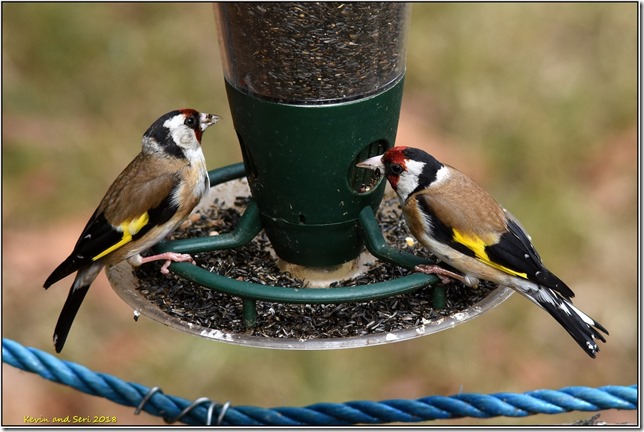
We were always looking forward to early summer when the adults started bringing their young to the bird-feeder. After hatching, the chicks were fed predominantly on regurgitated seeds, The juveniles were less colourful with grey-brown spotted plumage and the lack of face markings helped them to avoid the attention of predators. The memorable, striking reds and yellows only surface after the first moult. Young Goldfinches were often known as grey pates.

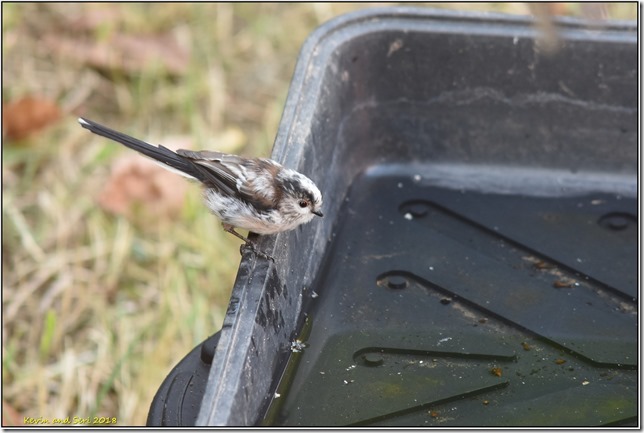
We also enjoyed the visits from the gregarious and noisy Long-tailed tits. They were easily recognisable with their distinctive colouring of patterned soft-pink plumage, a tail which was bigger than their body, and their undulating flight in small excitable party. Their fluffy pink, black and white plumage held in a layer of air, their appearance had been likened to a ball of cotton wool and given rise to the names ‘Muffin’ and ‘Mumruffin’. They were also known as the ‘the flying lollipop’ during flight. We enjoyed listening to their soft, bubbly contact calls that filled the air.

From our window, we saw fluffy balls of these tumbling, see-sawing birds bouncing towards the bird-feeder, their high-pitched, rolling si-si-si-si-si calls, punctuated with percussive, clipped notes, announcing their arrival. They were always in flock for many reasons. The more eyes there were, the better the chance a predator will be spotted and also better chances of finding food. Their excitement at finding the fat-balls was revealed by their excited, high-pitched twitterings which usually alerted us to their presence.

One of the most anticipated visitor to our garden was the striking black-and-white Great Spotted woodpecker. We always enjoyed their presence and find it hilarious that it was always trying to hide on the side of the fat-ball feeder away from our sight. This was a juvenile male with a red crown on the top of the head. It was less glossy than the adults and had a brown tinge to its upperparts and dirty white underparts. The markings were less well-defined and the lower belly was pink rather than red.

The juvenile was a lot bigger than the Long-tailed tits but that didn’t stop them sharing the fat-balls. The juvenile will be sexually mature when aged one year, and will start its courtship behaviour in the following December. After feeding, it flew off to the elderflower tree at the bottom of the garden with a very distinctive bouncing flight. I heard the ‘chick, chick’ contact calls and I wonder if there was another one nearby. Then it flew off into the scrubland behind the cul-de-sac.

Babe was very thankful for the presence of these birds to our garden. It kept him company as he was convalescing from broken ribs. Earlier in the month, when we were at our favourite playground, one of the photographers fell to the floor in the hide and had an epileptic seizure. Unfortunately, he fell under the bench and was thrashing badly. Thankfully, Babe knew what to do and tried to help him onto his side. It was just unfortunate that Babe banged his ribs on the bench when he did that. Another photographer called for an ambulance while Babe tried to calm the sick man.
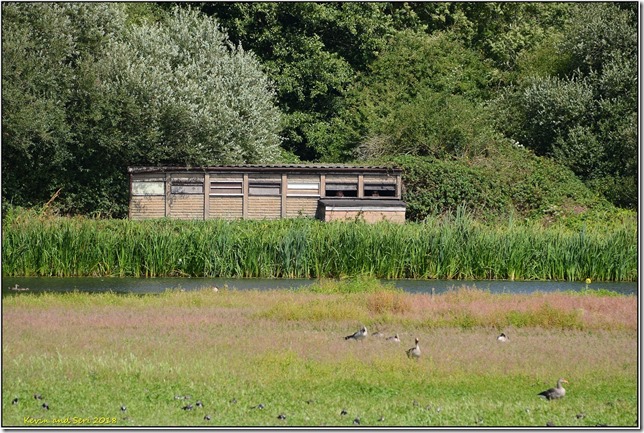
We waited for about an hour before the ambulance arrived. Thankfully, he was stable by this time and was aware of his surroundings. The paramedic had to walk in as the reserve was not accessible to vehicles. The sick guy was led to the ambulance and taken to hospital. In the mean time, Babe had just realised that he had broken his ribs. We left after that because Babe was feeling a bit rough. We didn’t go to the doctor as broken or bruised ribs needed no medical attention as they should heal by themselves within 3-6 weeks. But if he coughed up blood, he will go ASAP.

Babe later realised that there was no poster in the hides in case of emergencies. When we were there, the hide was quite full as there was about a dozen of us in it. If Babe was not there, the others would not know what to do. In this case, the first thing to do was to put him on his side and to make sure he did not swallow his tongue. Early interventions were important because it would take at least an hour before help arrived. Babe suggested to the Trust to put First-aid posters in all the hides and we were very pleased that they had taken the advice and the posters were now up. We had no news from the photographer and hoped we will see him back to Brandon.

Before the eventful episode, as soon as we arrived in the car-park, we were greeted by these swallows on the wire. After a summer of prolonged dry, hot spells, they were now gathering, twittering and chattering information about their upcoming long and arduous journey south to the African continent for the winter months. They were now taking short ‘test’ journeys and searching out safe communal roosts. The long journey over open seas, using the shortest possible route away from safe coast and timed their departure to coincide with a tail wind or ahead of a weather front. The return journey to Africa took about 6 weeks.

Since Swallows fed entirely on flying insects, they don’t need fattening up before leaving as they can snap up their food along the way. We had a nice surprise when we saw them hawking after insects on the lake outside Baldwin Hide. Enjoying their aerobatics, I marvelled at their ability to fly all the way to Africa, across the Sahara to overwinter as they weighed a little more than a pound coin. As I watched them wheeling and criss-crossing each other in flight, it seemed that a collision was inevitable, but they were masters of their flight.

Then we headed straight for East Marsh Hide where the low water level had brought in a few rarities flying in to feed on the exposed mudflats. Last month, a Wood sandpiper had brought an influx of photographers, twitchers and visitors to the reserve. Earlier in the week, a Greenshank was spotted feeding and Babe was very fortunate to have seen it. As usual, I was late to the party and it was nowhere to be seen.

Greenshanks were medium-sized slim waders with olive-grey above and silvery-white below, with dark streaking on the breast. They;d long, slightly upturned grey bills with striking grey-green legs. They fed in the shallow water, pecking at the mud, water or vegetation as they walked and caught fish by using a dash-and-lunge technique. They were passage migrants and scarce winter visitors.

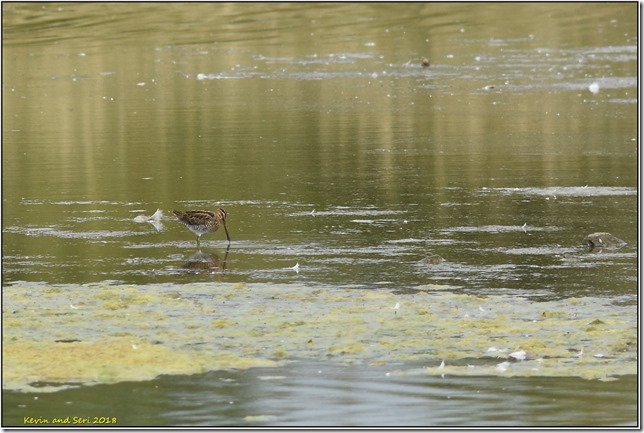
We were surprised when we spotted Common snipes feeding on the mudflats in the middle of the very shallow lake. Usually these cryptically coloured waders were only seen foraging in the vegetated fringes of the mudflats or skulking under the reeds. These superbly camouflaged waders were now out in the open, probing under the moist substrate for insects, earthworms, crustaceans or spiders with their elongated bills. Food on the surface were located by sight and picked up, but prey under the mud was located using the touch-sensitive sensory pits at the tip of the flexible bill.
A pair of Little egrets flew in and joined the party. It was an adult with a juvenile. Usually, individual birds don’t tolerate others coming too close to their chosen feeding site. They were feeding on the shallow clear water whilst walking through and stabbing prey with their bills. Sometimes, they ran through the shallows, stirring up the fishes and then picking them off. They were highly dependant on visual clues when hunting and feeding was highly affected if the water wasn’t clear.

On the main island, we spotted a Lapwing keeping an eye on three Little Ringed Plovers. Small and rotund waders, they blended nicely into the grey surroundings. They were busy foraging for invertebrates and crustaceans in a very distinct way; standing and watching, running forward, pecking, daintily picking up morsels of food then standing still again. It was quite cute to watch them scuttering across the mudflat, sometimes energetically trampling around on the sand to flush insects and aquatic invertebrates out of hiding places. In early autumn, they commenced a leisurely southward movement, wintering in the northern tropics of Africa.

Then between the two islands, a female Garganey emerged, skimming the water for plant materials and insects. It fed by filtering small particles from water that passed through its bill rather than tipping up. Unlike the striking male with its brown head and breast and a broad white crescent over the eye, the female was brown with pale eyebrow, dark eye line, pale lore spot bordered by a second dark line. A pale blue speculum or distinctive wing patch was visible when she was flapping her wings.

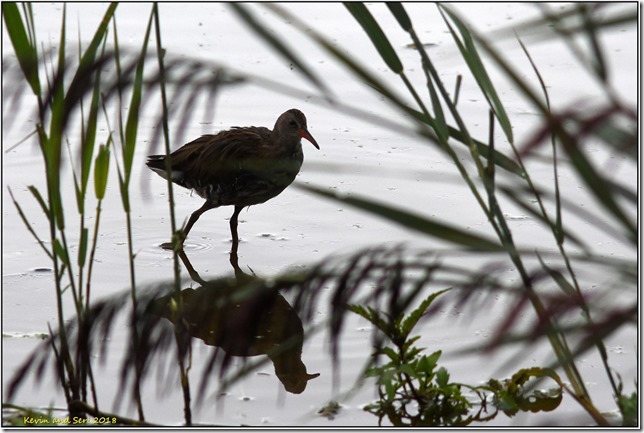
We ended the afternoon with a glimpse of the elusive Water-rail making a mad dash through the reed-beds. This highly secretive inhabitant of freshwater wetlands was often heard than seen. Its main call was known as ‘sharming’ which was a series of grunts followed by a high-pitched piglet-like squeal and ending in more grunts. It was used as territorial calls, alarms and announcements. Water rails were extremely hard to see, as they preferred to stay hidden in the thick vegetation.
This year, the Hajj, an annual pilgrimage to Mecca for Muslim adults who were able physically, mentally and financially to undertake the journey fell in August. The rites were performed over 5-6 days, beginning on the 8th and ending on the 13th day of Dzulhijjah, the last month of the Islamic calendar. I didn’t have the opportunity to join in the Eid prayers because it started very early at about 8 am. Instead, I left a few tins of cookies in the mosque for those who were there to enjoy. It was a co-incidence that on the same day, my department had our annual long lunch at the Farmhouse in Canley.
It was very busy as there were many tables joined together with families having their Eid celebratory meals. Thankfully, we’d made reservations and was seated in a nice corner. We have been here several times and I always chose the same menu which was the mixed Tandoori grill. The only difference was that the rice and nan bread were sold separately when in the previous visits, they were included in the meal. Service was quite slow due to the large number of people but thankfully, the food arrived at nearly the same time.

A week later, my colleagues and I went to Creams, an ice-cream parlour, besides Swanswell Lake again. We needed something cooling to end the working week and also to start the weekend. Every visit was an indulgent adventure for the senses as we perused leisurely the decadent range of desserts, milkshakes and smoothies from the American-style parlour. Although the place was buzzing, we got seated straight away into the comfy booth. We went to the counter and ordered and it arrived in about 20 minutes. I chose the waffles with sliced fresh strawberry, drizzled with strawberry sauce. A pot of vanilla ice-cream was included. My oh my…it was so decadent and rich. Oh…my poor hips

It was also our 22nd wedding anniversary and we celebrated our beautiful day at one of our favourite place, in Slimbridge WWT. After nearly 2 weeks of being cooped up in the casa, Babe was having cabin fever and he badly needed some fresh air and exercises. His ribs was healing, albeit very slowly. Most days I’d to take the bus home so he would not exert himself driving during the rush hours. As soon as we entered the grounds of the reserve, there were a few school buses already parked. It was the school holidays and I guess it was going to be busy day.

The Giant Lego® Brick Animal Trail was also back to spend time with their real-life cousins. The ground had now been invaded by giant animals and excited school kids. Luckily these giants were a lot more static than the animals that lived here all year round, so they posed no threat. Visitors were able to enjoy fourteen individually-designed 1.5m Lego® brick animals that formed a wild adventure trail for kids (and big kids) to inspire them to build a better future for nature. It was an amazing way of putting the spotlight on some really important species, many of which were endangered.

Wildfowl and Wetlands Trust (WWT) had the summer long activity covering their many acres of ground all over England. From the 7th of July right through to the 23rd of September WWT sites were running these animal trails.. Each sculpture was built by professional Lego builders, taking hundreds of hours and using no less than 253,728 bricks! If meeting these giant animals weren’t exciting enough, the younger visitors could also build-their-own mini figures and booked onto one of the interactive LEGO® workshops.

We didn’t go checking them out and only came across them when we wandered from one hide to another. But, I knew they were back with three NEW friends - Sam the short-eared owl, Walter the water vole and Skye the stork. We met Sam on the way to Discovery Hide at the South Lake. Sam took an amazing 80 hours to build with an incredible 37,884 LEGO bricks. I was so tempted to pluck a brick and see if anybody noticed it missing but I was good girl

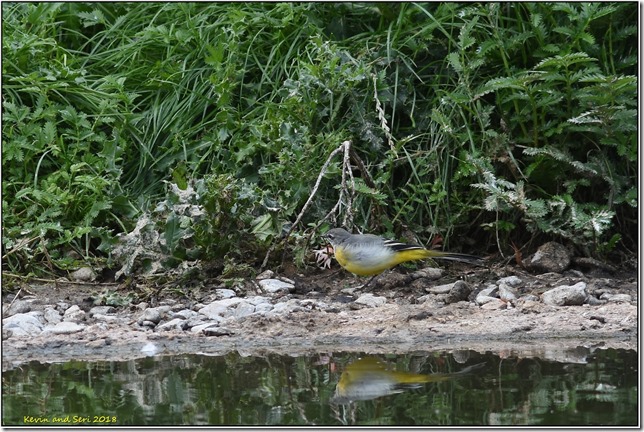
When we walked past the Caribbean flamingo enclosure, Babe spotted this Grey wagtail foraging for aquatic-type insects and invertebrates lurking under the overgrown bushes by the mud-banks. The slate grey upper parts and distinctive lemon yellow under-tail were visible as it moved. The long tail gave it an elegant profile and it was continually active, pumping its tail up and down as if for fun. It kept on wagging its long tail at an almost incessant rate whilst walking or running briskly along the ground.
Rushy hide was very quiet. Mallards were dabbling for aquatic vegetation and invertebrates in the shallow water. A juvenile Lapwing was also foraging for worms and insects on the mudflats. A wader flew in showing its faint wing-stripe and oval white patches either side of the tail. It was a Ruff. Best known as a passage migrant, it was great to see during the early weeks of autumn passage as they moved from Scandinavia towards wintering sites located within the Sahelian floodplains in Africa.

Then we checked the rest of the hides. Unfortunately, the Tack Piece was empty and the fields were still dry due to the hot weather. We saw a herd of cattle rushing into the lake to cool down and having a drink. Cattle was used for conservation grazing, a natural and sustainable alternative to mechanical mowing. The selective nature of the grazing produced a tussocky appearance, providing a diverse range of structural habitats for insects, reptiles and amphibians. Their diet was not restricted to grass as they enjoyed eating a wide range of vegetation including brambles, leaves, bark and the dreaded Himalayan balsam. Their hooves also broke up bracken and rushes, so they were essential for managing the spread of invasive and undesirable plant species.

Then we walked back into the grounds and had a very nice surprise when we walked past the Andean flamingos enclosure. They’d chicks!!!! When did that happened??? We read a notice and found out that three pairs of Andean flamingos were given eggs of their Chilean counterparts to nest. The reason was that the Andean had been prompted to lay 9 eggs by the record-breaking temperatures that we’d. Unfortunately, the flock had been infertile for 19 years and as a result the eggs were not viable and the expectant mums and dads were left without chicks to rear


Their keepers decided that, as the Chilean flock was also laying multiple eggs, a foster program might help prompt fertility in the Andean group. They gave six of the birds a handful of eggs to nest and hatch and now the young chicks were being raised by them. Flamingos were fickle breeders and could go years without nesting successfully.Thankfully, the recent heat had the desired effect so with the Andeans in full parenting mode, they were given these Chilean chicks to bring up as their own.

Chilean flamingos are relatively similar to the Andean. They lived side-by-side in the wild but survived on different diets.The Chileans have shallow –keeled bills that filtered algae and plankton from the water and mud. They also fed on plant seeds and small fishes. Andean flamingos have deep-killed bills and were filter feeders, feeding on food particles from water, by passing food and water over the highly-specialized bill equipped with filtering structure. They fed mainly on diatoms, algae of genus Surinella, taking the food between the sediment at the bottom and the water just above it .
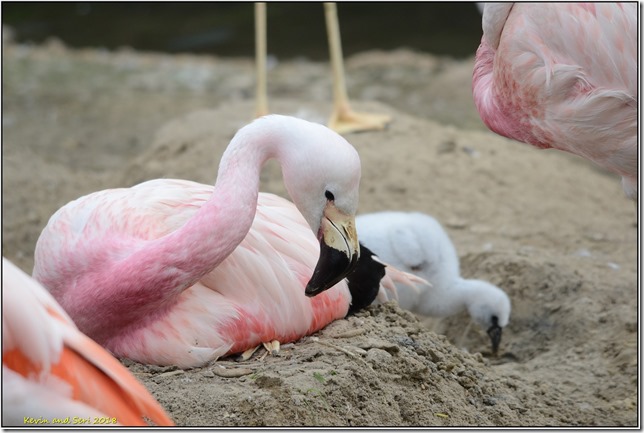
Some of these Andean flamingos had arrived at the centre in the 1960s and had been at the reserve longer than any of the staff. One of the foster mums was from the last set of successful Andean chicks, raised in 1999. These short grey straight beaked chicks looked very different to the adults. It was only a couple of years later that they developed the characteristic pink feathers and the bent beaks. Slimbridge was the only place in the world where all six species of flamingos could be seen.

It was hard to leave these bundles of fluff and we were looking forward to see their future development. We made a quick pit stop at South Lake to see what was about. A large flock of Black Tailed Godwits were busy feeding in the shallow water. They still had the bright orangey-brown chests and bellies. Soon, it will change to a more greyish-brown for winter. They were sociable birds, forming large group when feeding, probing the mud with their bills for invertebrates.

We ended the month with a trip to Longford Park to check out what the resident Rose-ringed Parakeets were up to. We headed straight to the row of Weeping Willows that overhang the banks of the River Sowe. It was very quiet which meant they weren’t around as their squawkings often led to their presence. We continued walking along the footpath and suddenly we heard loud shrills and when we looked up saw six of them flying past and disappeared. The last time we saw them, there were 4 which meant that they’d 2 chicks. I was so chuffed that they were still around. We waited for about half an hour to see if they returned, but all was quiet. We will definitely come again to check them out.

“August creates as she slumbers, replete and satisfied”
~Joseph Wood Krutch~


 The team only used the finest Belgian chocolate couvetures and coatings, sourced from local Sussex suppliers. We went in and the place was so packed. The interiors was darkly gothic and splendidly decadent and the stuff was out of this world. I purchased the first thing I could afford and left. You could spend a fortune here.


